
Made in Switzerland” versus “Made in China”: The Impact of Country-of-Origin Information on Perceived Quality and Purchase Intention
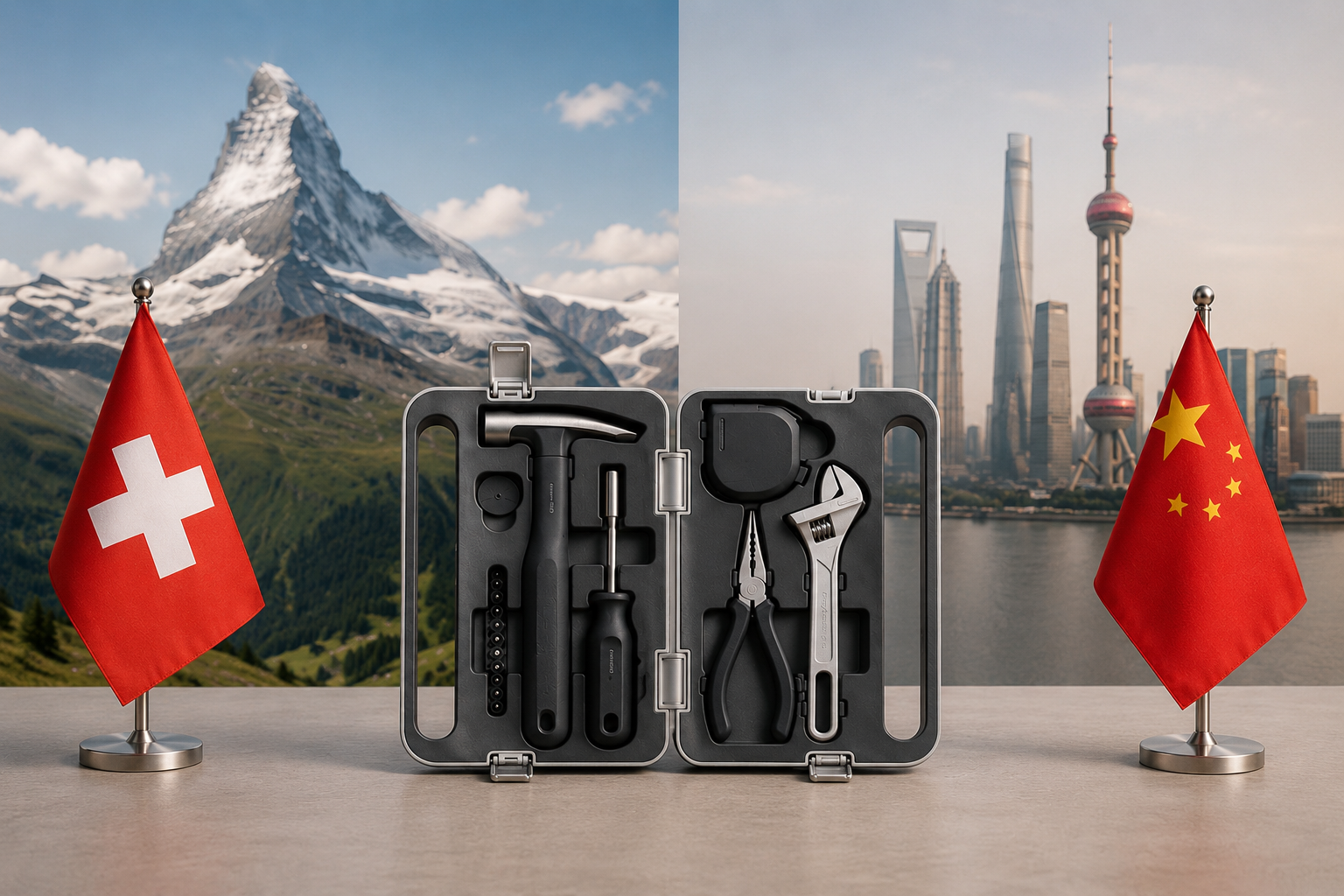
In today’s globalized marketplace, country-of-origin information continues to influence how consumers evaluate products. Especially in online shopping environments, where products cannot be physically inspected, labels such as “Made in Switzerland” or “Made in China” serve as important cues that help consumers form judgments about quality, ethics, and purchase desirability. This thesis examines whether identical products are evaluated differently depending solely on their country-of-origin label.
Objective and Research Question
The objective of this thesis is to investigate how “Made in Switzerland,” “Made in China,” and “Made in Norway” influence consumers’ perceptions of:
- Perceived Quality
- Perceived Ethicality
- Country Image
- Purchase Intention
Additionally, the study examines whether Ethical Consumer Orientation moderates these relationships.
Methodology
- Quantitative scenario-based online experiment
- Between-subjects design with three experimental conditions:
- Switzerland
- Norway
- China
- Participants evaluated an identical toolbox product
- Only the country-of-origin label was manipulated
- Measurement of perceived quality, perceived ethicality, country image, and purchase intention
- Additional mediation and moderation analyses were conducted
Key Findings
- Country-of-origin information significantly influences product evaluations
- Products labeled “Made in Switzerland” received the most favorable evaluations
- Products labeled “Made in China” received the least favorable evaluations overall
- Norway generally occupied an intermediate position
- Perceived Quality emerged as the strongest driver of purchase intention
- Perceived Ethicality and Country Image also significantly influenced purchase intention
- Ethical Consumer Orientation showed only limited moderating effects
Conclusion and Contribution
The findings demonstrate that country-of-origin information remains highly relevant in modern e-commerce. National manufacturing reputation continues to function as a powerful signal of quality, trustworthiness, and ethical standards, ultimately affecting consumers’ willingness to purchase. The study contributes to the country-of-origin literature by integrating quality perceptions, ethical perceptions, country image, and ethical consumer orientation into a unified framework and provides practical implications for branding, sustainability communication, and international market positioning.